


"Reta" is the common short name for retatrutide, a single synthetic peptide studied in vitro as a triple agonist of the GIP, GLP-1 and glucagon receptors; "reta peptide" and "reta peptides" refer to the same research compound, not to a separate family of molecules.
Across supplier listings, research forums and search queries the same research material turns up under several names: retatrutide, reta, reta peptide, reta peptides, and the catalog label RT-GLP3. This guide maps those names onto one defined chemical identity so laboratory records stay unambiguous.
What does "reta" stand for?
Reta is an informal contraction of retatrutide, the international nonproprietary name (INN) for a 39-amino-acid synthetic peptide carrying a C20 fatty-diacid side chain. Adding the generic word peptide to make "reta peptide" or "reta peptides" does not change the chemistry — it points at the same molecule. On any assay record, the full name retatrutide and the molecular identifiers are the unambiguous references, not the nickname.
Is "reta peptide" different from retatrutide?
No. There is one compound. "Reta peptide" and "reta peptides" are naming variants that circulate because the shorthand is quick to type; they do not denote a modified analog, a salt-specific form, or a blend. When comparing material between lots or sources, confirm identity against the molecular formula and measured mass rather than the label on a listing. The note on confirming retatrutide identity by mass covers how that check is run.
What is the triple-agonist identity?
Retatrutide is described in the research literature as a single peptide that engages three receptors from the incretin and glucagon families: the glucose-dependent insulinotropic polypeptide (GIP) receptor, the glucagon-like peptide-1 (GLP-1) receptor, and the glucagon receptor. In receptor-expressing cell lines, agonism at each receptor is read out through downstream second-messenger signaling such as cAMP accumulation. This three-receptor profile is what separates retatrutide from single-agonist (GLP-1 only) or dual-agonist tool compounds in a comparative in vitro panel.
| Name used | What it refers to |
|---|---|
| Retatrutide (INN) | The defined 39-residue synthetic peptide |
| Reta / reta peptide / reta peptides | Informal shorthand for the same compound |
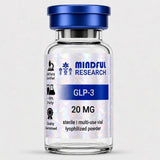
| RT-GLP3 / "GLP-3 RT" | Catalog label for the same research material |
How does "reta" relate to the RT-GLP3 / "GLP-3" label?
Some catalogs file retatrutide under the shorthand RT-GLP3 (or "GLP-3 RT"). That label is a product-naming convention, not a claim that a distinct "GLP-3 hormone" is involved. The RT-GLP3 identity explainer and the note on whether retatrutide is a "GLP-3" walk through why "GLP-3" is a label for this triple agonist rather than a separate incretin class.
Which identifiers pin down the compound?
For a spec sheet or certificate of analysis, the identifiers that fix retatrutide's identity are its molecular formula C221H342N46O68, a molecular weight of about 4731 g/mol, and CAS registry number 2381089-83-2 (development code LY3437943). These values should agree across the listing, the COA and a reference record before material is logged into inventory. Reading those fields is covered in the guide to reading a peptide spec sheet.
Related research guides
- What drives retatrutide research-material cost
- Navigating the published retatrutide study literature
- Vetting retatrutide suppliers
- A researcher's guide to retatrutide
- RT-GLP3 (retatrutide) research material
Research-use note
All materials discussed are supplied for in vitro laboratory research use only, and are not for human or animal use.