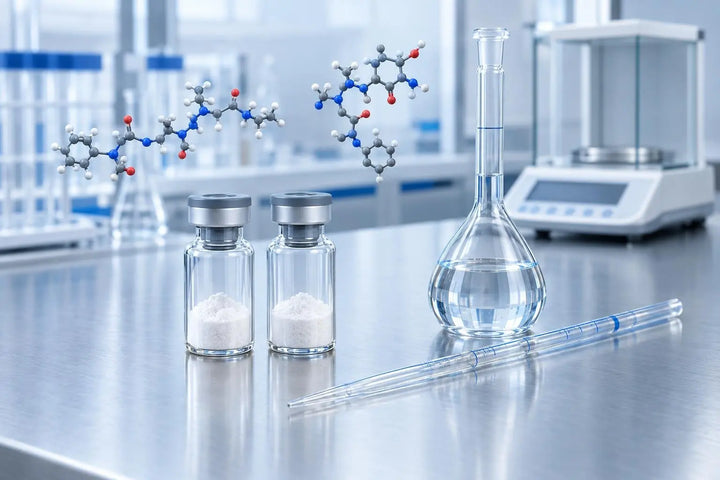
In the BPC-157, TB-500 blend the two peptides are present at a fixed 1:1 mass ratio (10 mg each in current lots), and they are catalogued together because each maps to a distinct in vitro research lane—not because of any documented combined effect.
This post covers how the composition is expressed and the in vitro rationale for examining the two BPC-157, TB-500 components in parallel. It is framed for laboratory research only.
How is the composition expressed?
A blend label states each component and its mass, not a single combined mass. For the current vial that is 10 mg BPC-157 plus 10 mg TB-500. Expressed as a ratio it is 1:1 by mass—but note that equal masses are not equal moles: because TB-500 is about 3.5× heavier than BPC-157, 10 mg of each is far fewer moles of TB-500 than of BPC-157. The concentration math guide shows how to convert mass to molarity for each component.
Why examine the two in parallel?
The two peptides are associated with separate, independently published in vitro model systems:
| Component | Typical in vitro model | Representative readout |
|---|---|---|
| BPC-157 | Nitric-oxide pathway; endothelial / angiogenesis models | Tube-formation, endothelial signaling |
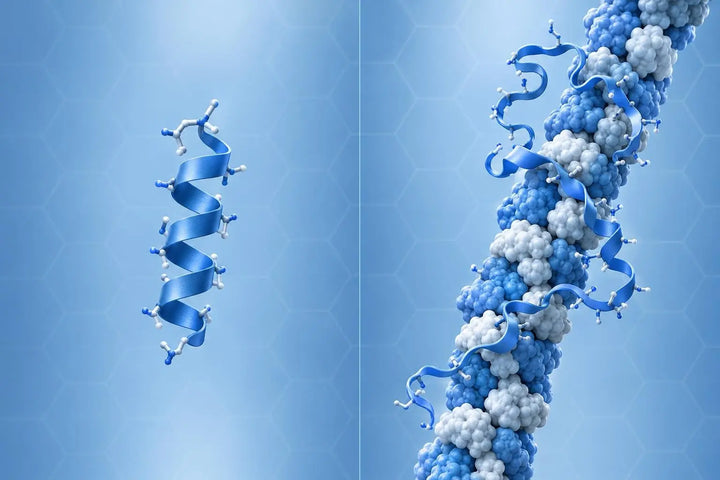
| TB-500 (thymosin β4) | G-actin sequestration; cell-migration (scratch) models | Monolayer gap closure, actin pools |
Because the readouts differ, a researcher using the blend is effectively running two parallel lines of inquiry from one reagent. Whether the two produce any interacting behavior in a shared model is an open experimental question; the blend format does not assert that it does. Controls for each component separately are therefore the usual design starting point (see the comparative analysis).
Does co-formulation change the chemistry?
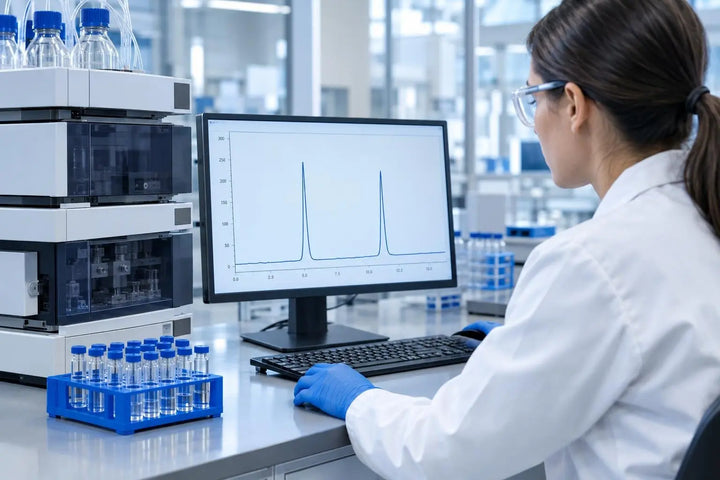
No. Co-formulation is a physical mixture of two finished peptides; it does not create a covalent adduct or alter either sequence. Each molecule’s identity, mass and HPLC profile are unchanged, which is exactly why a blend COA must show both peptides as separate species. See the BPC-157 & TB-500 primer for the underlying structures.
Related research guides
- BPC-157, TB-500 blend profile
- Peptide concentration and reconstitution math
- BPC-157 structure profile
- TB-500 vs thymosin beta-4
Research-use note
All materials discussed are supplied for in vitro laboratory research use only, and are not for human or animal use.