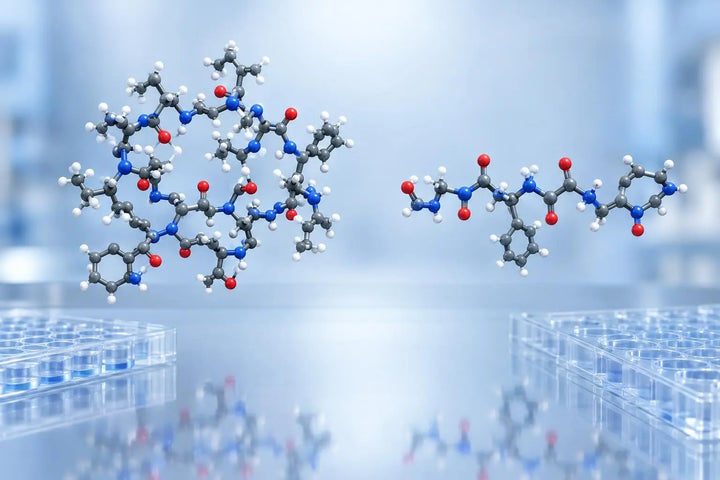
BPC-157 is a synthetic pentadecapeptide, a 15-amino-acid chain (sequence GEPPPGKPADDAGLV) corresponding to a partial fragment of a protein found in gastric juice, studied in vitro as a research material.
The BPC-157 peptide is one of the most searched research peptides, and the name appears written several ways — BPC-157, BPC 157, bp 157 peptide, or the plural BPC 157 peptides. All refer to the same compound: a short, fully defined sequence rather than a full-length protein.
What is BPC-157?
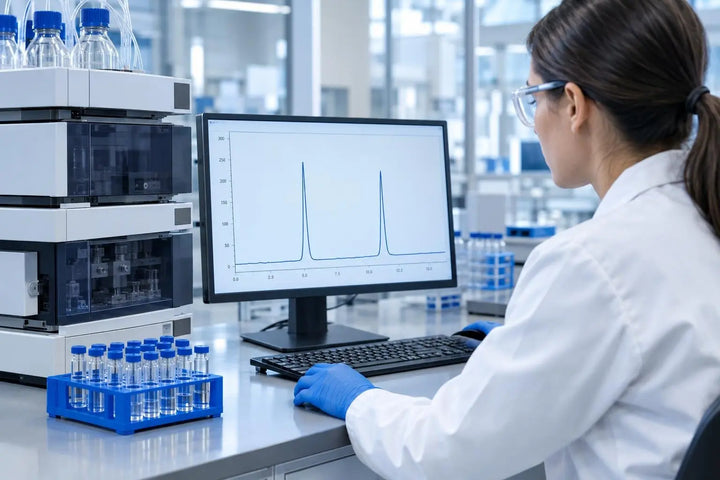
BPC-157 ("body protection compound-157") is a stable pentadecapeptide. Its molecular formula is C62H98N16O22, its monoisotopic/average molecular weight is approximately 1419.5, and its CAS number is 137525-51-0 (PubChem CID 9941957). Because it is only fifteen residues long, it is prepared by solid-phase peptide synthesis and characterized by HPLC and mass spectrometry like other short peptides.
What does the sequence look like?
The one-letter sequence is Gly-Glu-Pro-Pro-Pro-Gly-Lys-Pro-Ala-Asp-Asp-Ala-Gly-Leu-Val (GEPPPGKPADDAGLV). The three consecutive prolines near the N-terminus contribute to the conformational rigidity that researchers associate with its stability in aqueous and acidic conditions.
How is BPC-157 studied in vitro?
In cell-based research, BPC-157 is most often discussed in the context of nitric-oxide (NO) system signaling and angiogenesis-related assays, as well as fibroblast and endothelial cell-migration readouts such as the scratch assay. These are mechanistic, laboratory models; this profile describes assay context only and makes no claims about effects in humans or animals.
How is identity and purity confirmed?
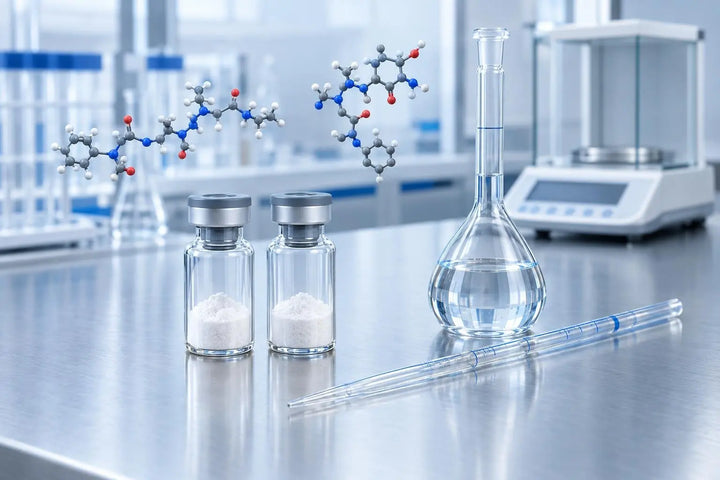
Compound identity is confirmed by mass spectrometry against the expected mass for C62H98N16O22, and purity is measured by reversed-phase HPLC. A certificate of analysis should report both. See our guides on mass spectrometry for peptide identity and reading a COA line by line. Research-grade BPC-157 is supplied as a lyophilized powder for reconstitution with reconstitution solution.
Related research guides
- Why "Wolverine Peptide"? The nickname vs lab data
- BPC-157 name variants (BP157, BCP157, BBC157)
- BPC-157 10 mg vial: stock concentration math
- Sourcing BPC-157 as a research material
- BPC-157 and TB-500: a biochemical primer
Research-use note
All materials discussed are supplied for in vitro laboratory research use only, and are not for human or animal use.