When sourcing BPC-157 as a research material, the documentation that matters is a current certificate of analysis showing HPLC purity and mass-spec identity against C62H98N16O22, not the price alone.
What should a BPC-157 COA show?
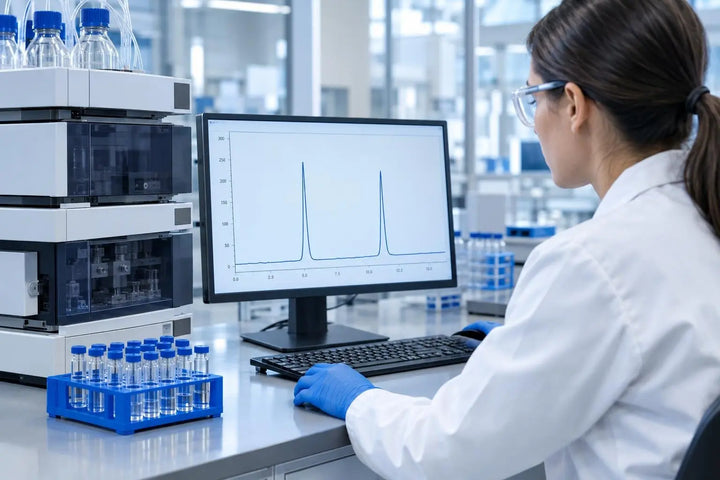
A usable certificate of analysis reports the batch identity confirmed by mass spectrometry (expected mass for C62H98N16O22), purity by reversed-phase HPLC (commonly ≥98% for research grade), net peptide content, and endotoxin status where relevant. See reading a COA line by line.
Why do HPLC and MS both matter?
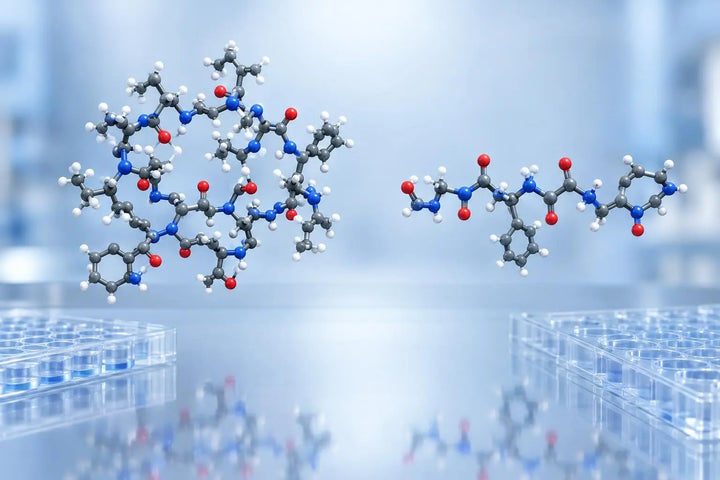
HPLC answers "how pure," and mass spectrometry answers "is it the right molecule." A compound can be pure but mis-identified, so a sound sourcing decision requires both. Our guide to mass spectrometry for peptide identity explains the read-out.
How do you compare suppliers?
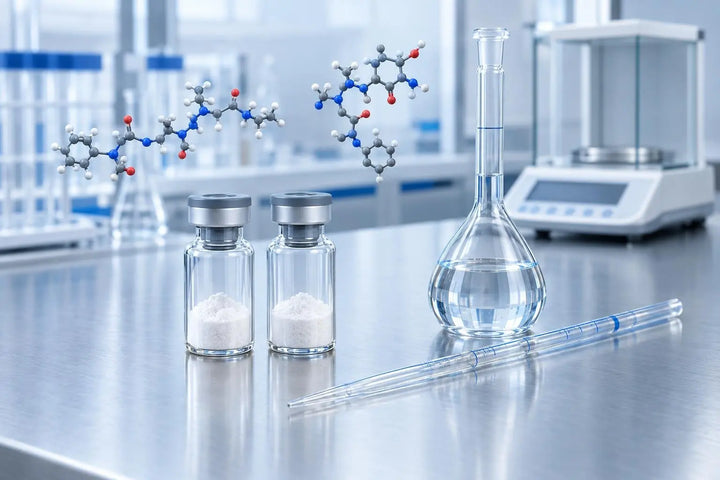
Compare on documentation, batch traceability and consistency rather than listing price. Research-grade BPC-157 is supplied as a lyophilized powder with a per-batch COA; pair it with reconstitution solution for stock preparation.
Related research guides
- BPC-157 pentadecapeptide: sequence and structure
- Reading a COA line by line
- Mass spectrometry for peptide identity
Research-use note
All materials discussed are supplied for in vitro laboratory research use only, and are not for human or animal use.