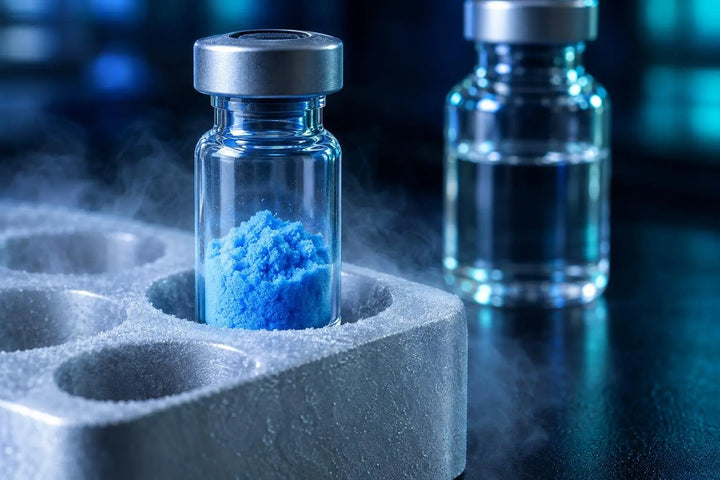
Cold storage is the single most important factor in preserving research peptides: lower temperatures slow the chemical reactions that degrade a compound over time. This guide explains cold-chain storage.
Why cold slows degradation
Chemical degradation reactions proceed faster at higher temperatures. Storing a compound cold slows these reactions, extending how long the intact molecule is preserved.
Refrigeration vs freezing
Short-term storage often uses refrigeration, while longer-term storage uses a freezer. The colder the storage, the slower the degradation, within the limits of what a laboratory's equipment supports.
Temperature stability
Keeping a stable temperature matters as much as the temperature itself. Repeated warming and cooling stresses a compound, so a steady cold environment is preferred.
Organizing cold storage
Vial boxes and racks keep compounds organized inside cold storage, which reduces the time a freezer door is open and helps maintain a stable temperature.
Related research guides
- Storage & lab practice (overview)
- Light & moisture protection
- Labeling & inventory
- Aliquoting & freeze-thaw
Research-use note
All materials referenced are for in vitro laboratory research use only. They are not for human or animal use.
Related research: LIPO-C | MIC-C.