Good storage and laboratory practice keeps research peptides stable and identifiable: the main variables are temperature, light, moisture, and clear record-keeping. This overview introduces the essentials.
Why storage matters
Peptides are chemical compounds that can degrade over time if stored poorly. Controlling the storage environment preserves the intact molecule so that experiments stay reproducible.
The main variables
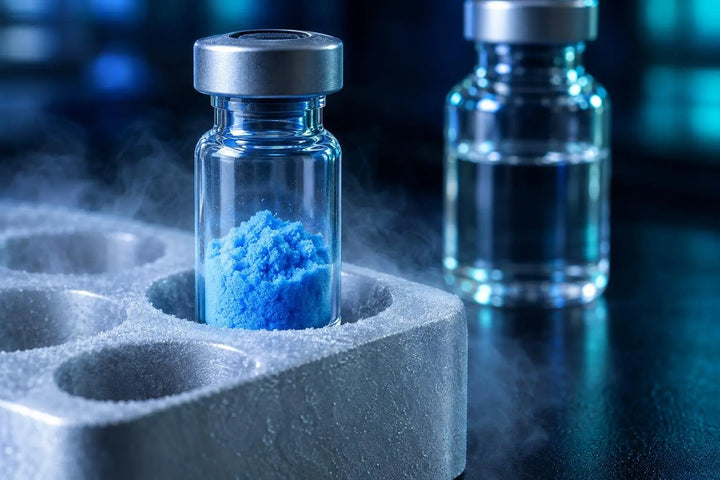
Temperature (cold storage slows degradation), light (many compounds are light-sensitive), and moisture (lyophilized powders are hygroscopic) are the three physical factors. Record-keeping is the fourth, administrative one.
Lyophilized vs reconstituted
Lyophilized (freeze-dried) powder is generally more stable than a reconstituted solution. Once in solution, a compound is usually stored cold and used within a shorter window.
Record-keeping and labeling
Clear labels and an inventory record prevent mix-ups and track how long a compound has been stored, which supports reproducible work.
Reading this cluster
The supporting guides below cover cold-chain storage, light and moisture protection, and labeling and inventory.
Related research guides
Research-use note
All materials referenced are for in vitro laboratory research use only. They are not for human or animal use.
Related research: LIPO-C | MIC-C.