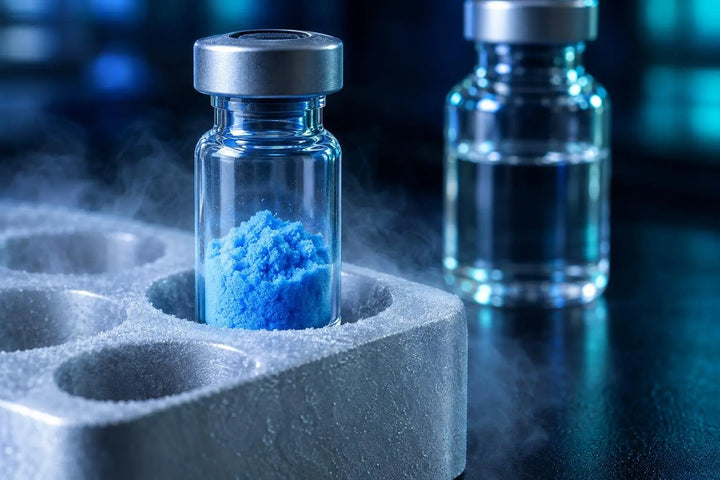
Epithalon is a synthetic tetrapeptide studied in vitro as a bioregulator, examined for its interaction with nucleic acids and gene-expression readouts in cell models. This profile describes the compound at the level of molecular biology.
What is epithalon?
Epithalon is a four-amino-acid synthetic peptide (Ala-Glu-Asp-Gly, AEDG) used as a research material. It is described here only by structure and molecular role, as a laboratory compound. Removing its C-terminal glycine gives the tripeptide Cartalax (Ala-Glu-Asp), 57.06 g/mol lighter.
What it is studied for
In cell-based research, epithalon is studied for how it interacts with DNA and influences gene-expression readouts. The focus is mechanistic, examining molecular interactions in a defined system.
How it is studied in vitro
Researchers use cultured cells and gene-expression assays, such as measuring messenger RNA or reporter-gene activity, comparing conditions against proper controls.
Why a short peptide is studied this way
A small, well-defined peptide is a convenient tool for probing a specific molecular interaction, because its chemistry is simple to characterize and reproduce.
Related research guides
- Bioregulator compounds (overview)
- Pinealon (tripeptide)
- Cartalax (AED tripeptide)
- Cartalax naming and the Khavinson family
- Gene-expression assays
Research-use note
Epithalon is supplied as a research material for in vitro research use only. It is not for human or animal use.
Related research: Epithalon.