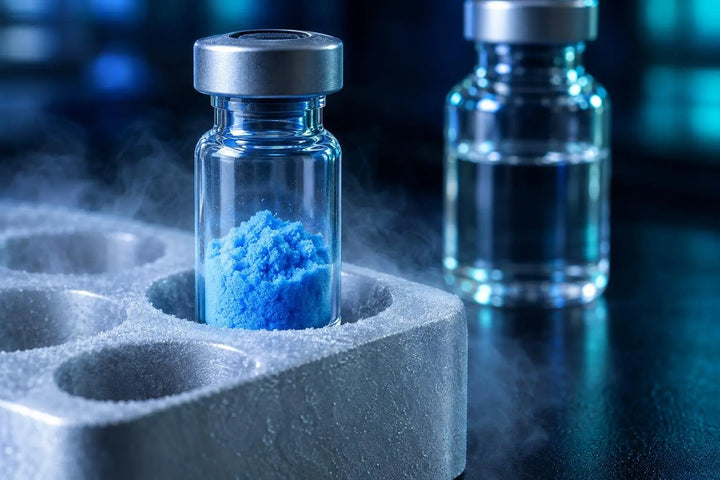
Short-peptide bioregulators are very short peptides studied in vitro for their interaction with DNA and their effects on gene expression in cell models. This overview introduces the area at the level of molecular biology.
What this area covers
This cluster covers short synthetic peptides, typically two to four amino acids, that are studied for how they interact with nucleic acids and influence gene-expression readouts in controlled laboratory systems. All framing here is mechanistic and in vitro.
Gene expression in brief
Gene expression is the process by which the information in a gene is read out to produce a protein. Researchers measure the level of this readout to characterize how a compound interacts with a cell's genetic machinery.
Example compounds
The supporting guides profile epithalon, a tetrapeptide bioregulator, and pinealon, a tripeptide bioregulator, each described only by structure and molecular role as a research material. Two further tetrapeptides, Testagen (Lys-Glu-Asp-Gly) and Livagen (Lys-Glu-Asp-Ala), differ from each other by a single C-terminal residue and from epithalon by the N-terminal residue, which makes the four a useful matched set for structure comparisons. A fifth member, the tripeptide Cartalax (Ala-Glu-Asp), is epithalon minus its C-terminal glycine.
How they are studied in vitro
Researchers use cultured cells and gene-expression assays (such as measuring messenger RNA levels) to characterize these peptides, always under controlled conditions and with proper controls.
Related research guides
- Epithalon (tetrapeptide)
- Pinealon (tripeptide)
- Testagen and Livagen (Khavinson tetrapeptides)
- Livagen peptide (KEDA)
- Cartalax (AED tripeptide)
- Cartalax naming and the Khavinson family
- Gene-expression assays
Research-use note
All compounds referenced are supplied for in vitro laboratory research use only. They are not for human or animal use.
Related research: Epithalon.