GHK-Cu is a copper-binding tripeptide: the short peptide GHK coordinates a copper(II) ion through its amino-acid side chains, and this copper-peptide complex is the research material studied in vitro. This profile describes the chemistry.
What is GHK-Cu?
GHK-Cu is the copper complex of the tripeptide glycyl-histidyl-lysine (GHK). It is described here only by structure and molecular chemistry, as a laboratory material.
How the copper is coordinated
Coordination chemistry describes how a metal ion is held by surrounding atoms. In GHK-Cu, nitrogen and oxygen atoms from the peptide's side chains and backbone bind the copper(II) ion, forming a defined complex.
Why coordination matters
The way the copper is held determines the complex's stability and chemical behavior. Researchers study this coordination to understand the complex as a defined, reproducible material. For how the metal-free peptide differs from the complex, see GHK vs GHK-Cu: the free tripeptide and its copper complex.
How it is studied in vitro
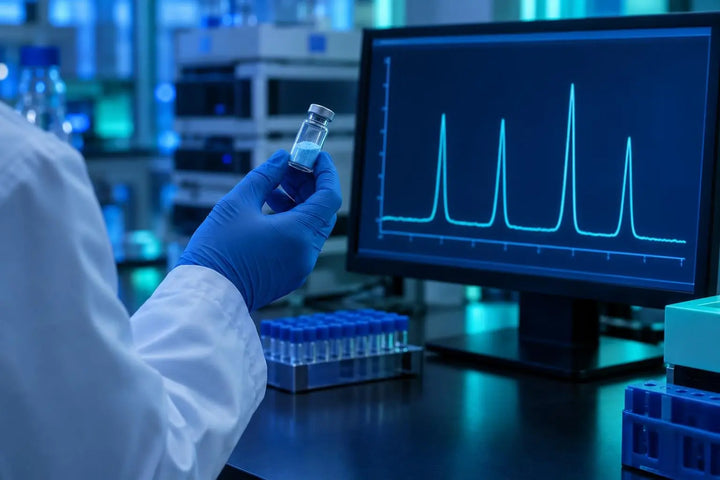
The complex is characterized with spectroscopic methods that report on the copper's coordination environment, alongside standard identity and purity testing.
Related research guides
- GHK-Cu research overview
- AHK-Cu vs GHK-Cu: two copper-binding tripeptides compared
- GHK-Cu name variants: one compound
- Sourcing GHK-Cu as a research material: COA, copper content and purity
- ECM remodeling pathways
- Collagen & fibroblast assays
- Scratch assay: measuring cell migration
Research-use note
GHK-Cu is supplied as a research material for in vitro research use only. It is not for human or animal use.
Related research: GHK-Cu.