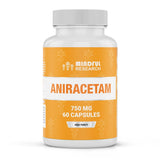

Racetam-class small molecules and short research peptides differ in structure, molecular target, and the in-vitro assays used to study them. This guide compares the two classes so researchers can pick the right reference compound for an assay.
Structure
Racetams are small synthetic molecules built around a pyrrolidinone ring. Research peptides are short chains of amino acids. This structural difference determines solubility, handling, and which targets each is studied against.
Molecular targets
The two classes are studied at different targets. Aniracetam, a racetam, is studied as a modulator of the AMPA glutamate receptor. Short peptides such as Semax and Selank are studied against their own distinct protein targets in neuronal cell models.
Lead assays
Each class has a characteristic lead assay. Receptor modulators like aniracetam are commonly studied with patch-clamp electrophysiology, which records receptor currents directly. Research peptides are typically studied with signaling and gene-expression assays in cultured cells.
Comparison table
| Property | Racetam (e.g. aniracetam) | Research peptide (e.g. Semax, Selank) |
|---|---|---|
| Structure | Small molecule (pyrrolidinone ring) | Short amino-acid chain |
| Studied target | AMPA glutamate receptor | Distinct protein targets per peptide |
| Lead in-vitro assay | Patch-clamp electrophysiology | Signaling and gene-expression assays |
| Handling | Small-molecule solubility | Lyophilized; reconstitute and aliquot |
Choosing a reference compound
Selection follows the target and readout your experiment requires. A glutamate-receptor question points to a modulator such as aniracetam; a peptide-signaling question points to a defined peptide such as Semax or Selank.
Related research guides
- Nootropic research compounds: receptor targets and in-vitro models
- Aniracetam: AMPA-receptor modulation in vitro
- Semax: a short peptide and its research targets
Research-use note
All compounds discussed are supplied for in vitro laboratory research use only and are not for human or animal use.