Research-peptide purity is verified by combining HPLC (how much of the material is the intended peptide), mass spectrometry (whether it is the correct molecule), and a Certificate of Analysis that documents both. This guide explains how those methods fit together.
What does "purity" mean for a peptide?
Purity is the percentage of the material that is the intended peptide, with the remainder being related impurities such as incomplete sequences. It is measured, not assumed, and is reported on the Certificate of Analysis (COA).
The core verification methods
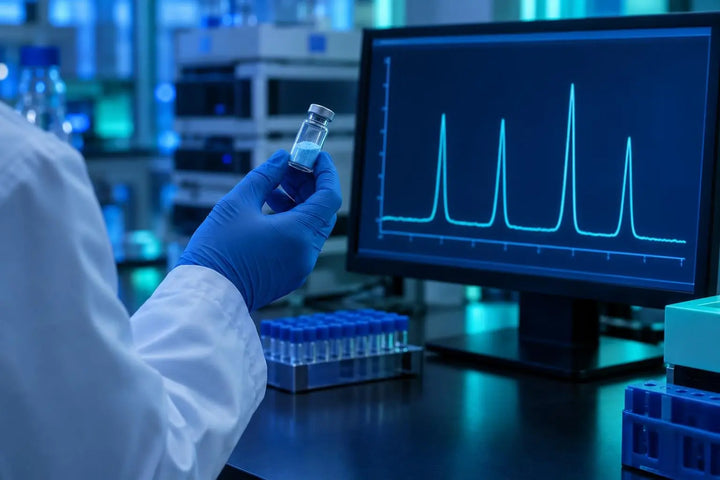
- HPLC separates the sample into its components and quantifies what fraction is the target peptide, giving the purity percentage.
- Mass spectrometry measures molecular weight to confirm the material is the correct molecule (identity).
- The COA records the sequence, molecular formula, molecular weight, purity, and the methods used.
- Endotoxin testing checks for bacterial contaminants that matter in sensitive cell-culture work.
Why both purity and identity are needed
A sample can be high purity but the wrong molecule, or the right molecule with significant impurities. HPLC answers "how much is the peptide," mass spectrometry answers "is it the right peptide," and only together do they verify quality.
How to read the result
Match the COA's reported molecular weight to the expected value (identity), then check the purity percentage and the HPLC trace. A documented, batch-specific COA is stronger evidence than a generic specification.
What this cluster covers
The supporting guides go deeper: reading a COA line by line, how HPLC measures purity, how mass spectrometry confirms identity, why at-home kits fall short, and endotoxin testing.
Find a COA: search every third-party lab report by product or batch number in our certificate of analysis library.
Related research guides
- Reading a COA line by line
- HPLC: how purity is measured
- Mass spectrometry for identity
- Why at-home test kits fall short
- Endotoxin testing explained
- Verifying Retatrutide purity (HPLC & COAs)
Research-use note
All materials discussed are supplied for in vitro laboratory research use only.