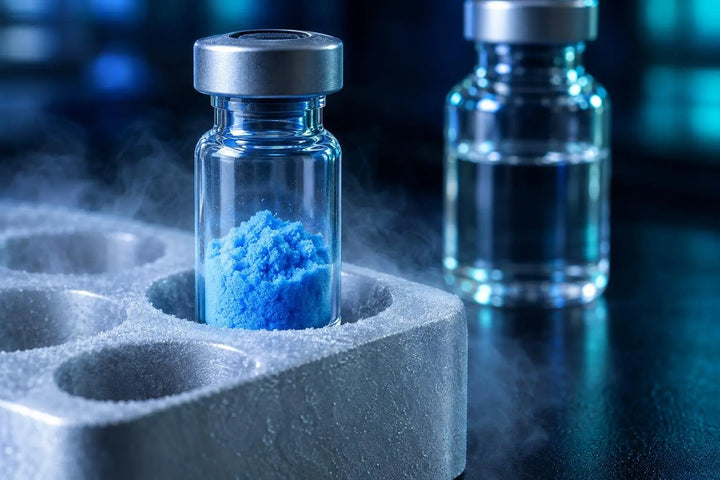
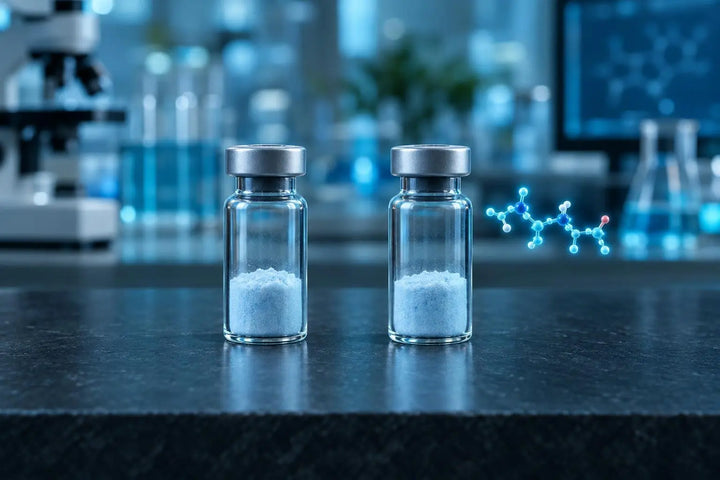
Some peptides resist dissolving because their chemistry makes them poorly soluble in neutral water, which is addressed by choosing a more suitable solvent and gentle technique. This guide explains why and what to do.
The chemistry of solubility
A peptide's amino-acid sequence determines how it interacts with a solvent. Peptides rich in certain residues can be basic or strongly self-associating, which makes them slow to dissolve in plain water.
Why water alone sometimes fails
Near-neutral water does not always provide the conditions a basic peptide needs to separate and dissolve. The material may remain as visible particles or a film.
What helps
- A more suitable solvent. A dilute acetic acid solution lowers pH slightly and helps basic peptides dissolve.
- Gentle technique. Add solvent down the vial wall, swirl rather than shake, and allow time.
- Temperature. Let the vial reach room temperature first; dissolving cold material is slower.
What not to do
Avoid vigorous shaking or heating, which can degrade peptides. Patience and the right solvent are more effective than force.
Related research guides
- How to reconstitute lyophilized peptides
- Choosing a reconstitution solvent
- Bacteriostatic water explained
Research-use note
All materials discussed are supplied for in vitro laboratory research use only.
Related research: Reconstitution Solution.