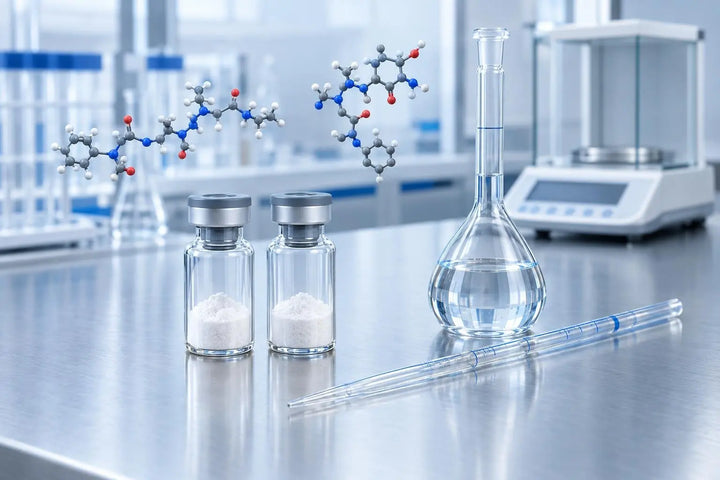
A 0.6% acetic acid solution is a dilute, mildly acidic solvent labs use to dissolve basic research peptides that do not go fully into solution in neutral water. This guide covers the spec and when it is the right choice.
What the spec means
“0.6%” is the concentration of acetic acid in water. The mild acidity lowers the pH slightly, which helps basic peptides dissolve where neutral water leaves undissolved material. It is supplied sealed and batch-tested as a research material; the batch Certificate of Analysis states what was tested.
When labs reach for it
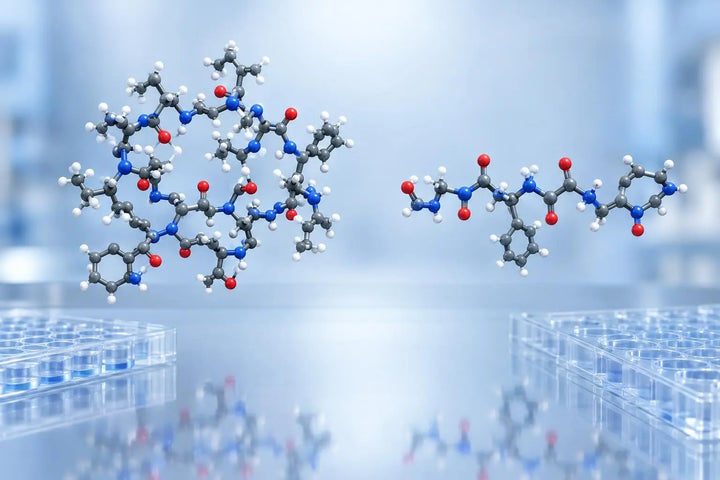
Use a dilute acetic acid solution specifically when a peptide is basic and resists dissolving in bacteriostatic water. If the peptide dissolves cleanly in water, there is no need for the acid.
How it compares to bacteriostatic water
| Solvent | Best for | Note |
|---|---|---|
| Bacteriostatic water | Most peptides, stored solutions | Contains a preservative |
| 0.6% acetic acid | Basic peptides that resist dissolving | Slightly lowers pH to aid solubility |
Sourcing it
Happy Peptides stocks a dilute acetic acid solution in a research size for exactly this use.
Related research guides
- Sourcing reconstitution solvents
- Bacteriostatic vs sterile water
- Choosing 3 mL vs larger solvent volumes
- Reconstitution-solution buyer's guide
Research-use note
All materials discussed are supplied for in vitro laboratory research use only, and are not for human or animal use.