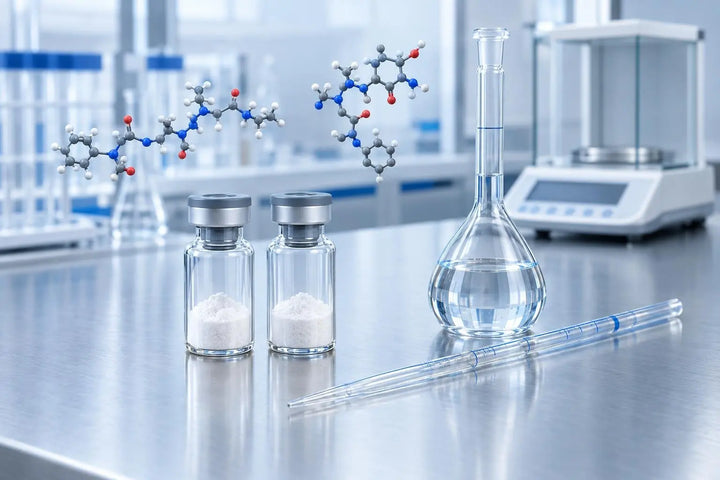
When buying a reconstitution solution for research peptides, the things that matter are a sealed, batch-tested supply, whether it carries a preservative, the solvent type for your peptide’s chemistry, and a fill volume matched to your protocol. This article walks through each.
Sealing and batch testing
The solvent vial should arrive sealed and batch-tested; the batch Certificate of Analysis states what has been tested. For solutions drawn from more than once, a preservative (bacteriostatic water) adds resistance to contamination between draws. The full background is in the bacteriostatic water for peptides guide.
Solvent type
Match the solvent to the peptide. Most peptides dissolve in bacteriostatic reconstitution solution; basic peptides that resist dissolving need a dilute acetic acid solution.
Fill volume
Pick a volume that matches your reconstitution volume and cadence. 3 mL is a common research size; higher-throughput work benefits from larger fills. The waste and cost-per-mL arithmetic is in 10 mL vs 30 mL bacteriostatic water.
Documentation
A research-supply source should describe the solvent, its concentration (for acid solutions), and its intended in-vitro use clearly.
Related research guides
- Bacteriostatic water for peptides: the full lab guide
- Sourcing reconstitution solvents
- 0.6% acetic acid: spec & when labs use it
- Bacteriostatic vs sterile water
- Choosing 3 mL vs larger solvent volumes
Research-use note
All materials discussed are supplied for in vitro laboratory research use only, and are not for human or animal use.