Most research peptides are made by solid-phase peptide synthesis (SPPS), which builds a peptide one amino acid at a time on a solid support. This overview explains the method and why it shapes purity.
What is solid-phase peptide synthesis?
SPPS anchors the first amino acid to a small insoluble resin bead, then adds each subsequent amino acid in a repeating cycle of coupling and deprotection. When the sequence is complete, the finished peptide is cleaved from the resin.
Why build on a solid support?
Anchoring the growing chain to resin lets excess reagents and byproducts be washed away at each step, which makes the repeated cycles efficient and automatable.
Why purity matters
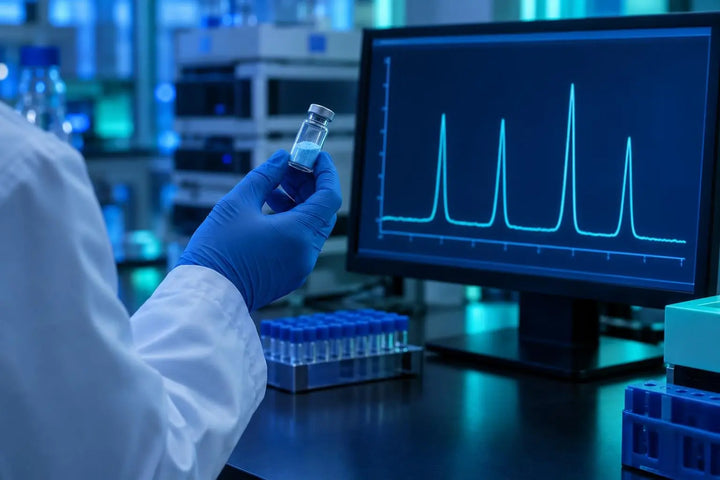
Each coupling step is highly efficient but not perfect, so small amounts of incomplete sequences can form. That is why finished peptides are purified and then verified by HPLC and mass spectrometry, and why a Certificate of Analysis reports a purity percentage.
From synthesis to the vial
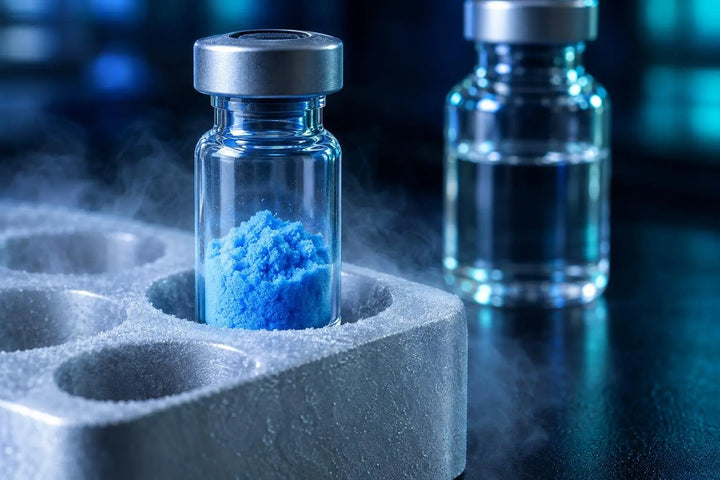
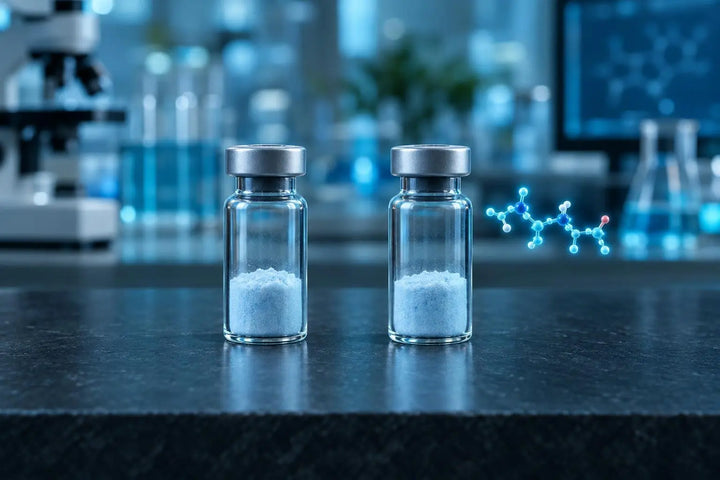
After purification the peptide is lyophilized into the dry material a lab receives, ready to reconstitute. The sequence, molecular weight, and purity on the COA trace directly back to the synthesis and purification steps.
Related research guides
- What are research peptides? A laboratory primer
- Lyophilized peptides: what freeze-dried means
- Peptide vs. protein vs. small molecule
Research-use note
All peptides discussed are supplied for in vitro laboratory research use only.