Isometric diagram of a microplate with a gradient of amber colorimetric intensity beside a dinucleotide molecular structure and a rising bar indicator, representing enzyme-cycling quantification
Mindful Research

Quantifying NAD+ and NADH In Vitro: Assay Approaches

Updated By: Mindful Research Team1 min read

Key takeaways

  • NAD+ and NADH are quantified in vitro with enzyme-cycling and other biochemical assays.
  • Enzyme-cycling amplifies a colorimetric or fluorescent signal proportional to the amount present.
  • Protocols separate NAD+ from NADH so the ratio can be calculated.
  • The NAD+/NADH ratio is a widely used readout of cellular redox state.
  • Results are compared within one experiment against controls.

NAD+ and NADH are quantified in vitro with enzyme-cycling and other biochemical assays, and the ratio between them is a widely used readout of cellular redox state. This guide explains the main assay approaches.

Why quantify NAD+ and NADH?

Because NAD+ and NADH participate in energy metabolism, measuring their levels and ratio gives a window into the redox state of cultured cells under different conditions.

Enzyme-cycling assays

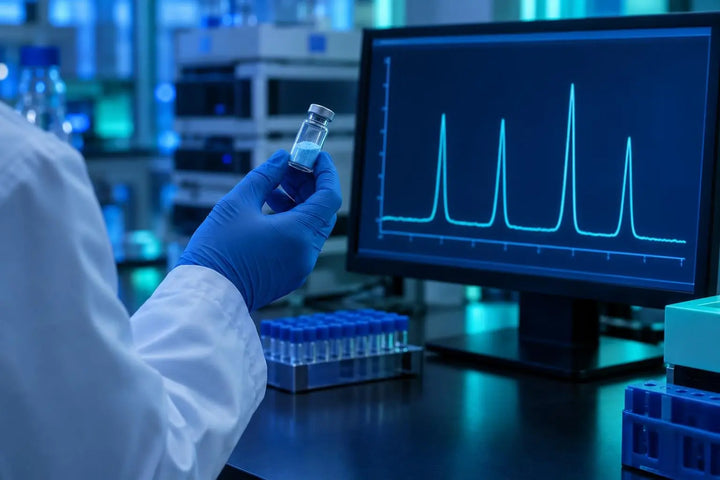
A common approach uses an enzyme cycle that amplifies a colorimetric or fluorescent signal in proportion to the amount of NAD+ or NADH present, allowing sensitive quantification in cell lysates.

Separating NAD+ from NADH

Because the two forms interconvert, assay protocols include steps to measure total dinucleotide and each form separately, so the NAD+/NADH ratio can be calculated.

Interpreting the ratio

The NAD+/NADH ratio is compared within a single experiment against controls, because absolute values depend on cell type, handling and timing.

Related research guides

Research-use note

All materials referenced are supplied for in vitro laboratory research use only.

Related research: LIPO-C | MIC-C.
Frequently asked questions

How is NAD+ quantified in vitro?

With biochemical assays, commonly enzyme-cycling formats that amplify a colorimetric or fluorescent signal proportional to the amount present. View NAD+

Why measure the NAD+/NADH ratio?

It is a widely used readout of the redox state of cultured cells.

How are the two forms separated?

Assay protocols include steps to measure total dinucleotide and each form separately so the ratio can be calculated.

How is the data interpreted?

Within a single experiment against controls, because absolute values depend on cell type and handling.

Research use only?

Yes, in vitro laboratory research use only.