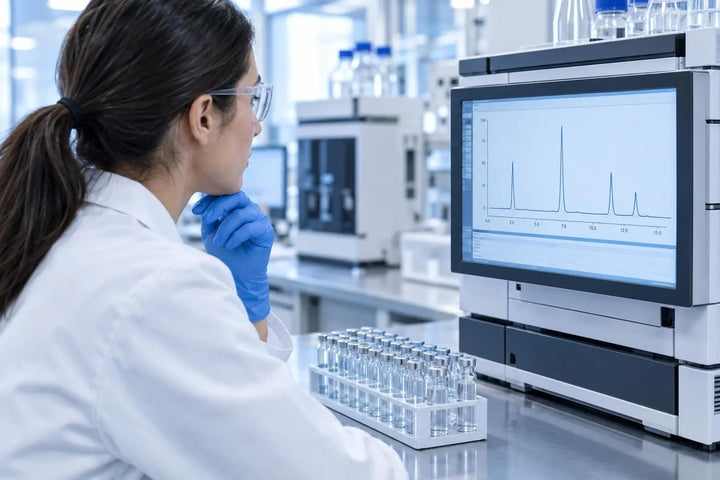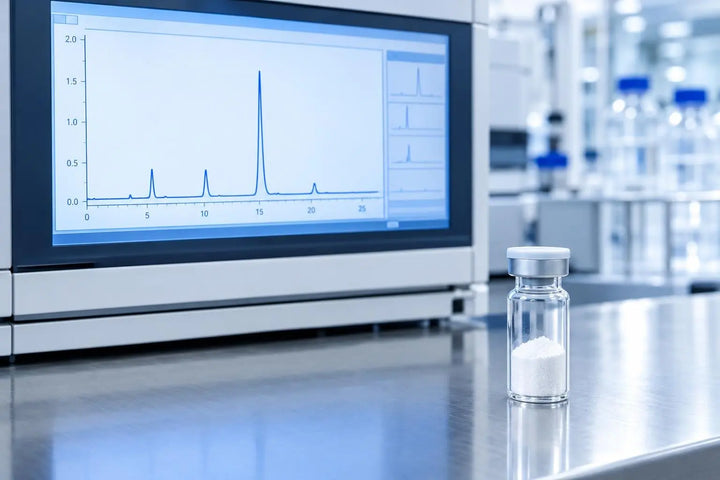
When sourcing dihexa (PNB-0408) as a research material, identity and purity are confirmed from a certificate of analysis (COA) that reports HPLC purity and a mass-spectrometry match to CAS 1401708-83-5 / C27H44N4O5 (monoisotopic [M+H]+ near 505.3).
What should a dihexa COA show?
A useful COA for dihexa lists the batch number, the analytical method, a numeric HPLC purity figure (commonly reported as >98–99% for research-grade material), and a mass-spec identity result. Because dihexa is a defined small molecule rather than a long peptide chain, the identity check is straightforward: the measured mass should correspond to the C27H44N4O5 formula. For the general approach to reading these documents, see our guide to verifying purity with HPLC and COAs.
How is dihexa identity confirmed?
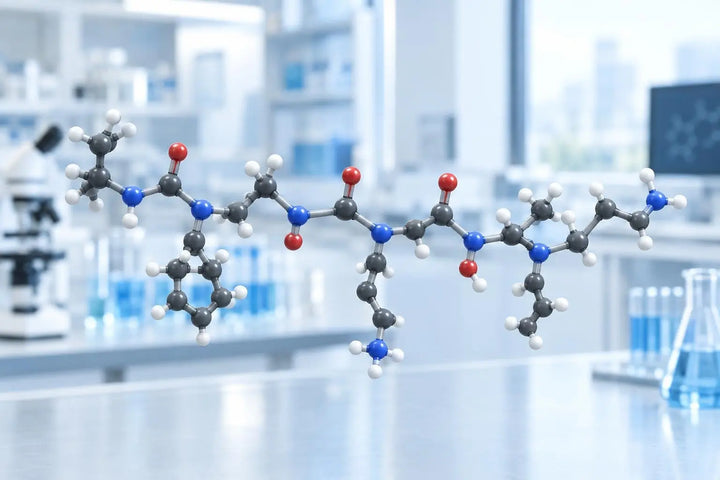
Identity is anchored on three cross-checkable values: the CAS number 1401708-83-5, the molecular formula C27H44N4O5, and PubChem CID 129010512. A supplier’s listed CAS and formula should agree with those authoritative records; where a product page and PubChem disagree, the PubChem record for the resolved compound is the reliable reference. Mass spectrometry provides the orthogonal confirmation that the material in the vial matches those identifiers.
What physical form does research dihexa ship in?
Research-grade dihexa is supplied as a white lyophilized powder. It should be stored cold and kept sealed and dry until reconstitution; once in solution it is handled as aliquoted stock. Vial sizes on the Dihexa listing are offered as 5 mg and 10 mg, which map cleanly onto the stock concentration math covered in the companion guide.
Where can researchers source dihexa?
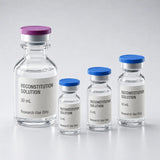
Happy Peptides supplies dihexa as an in vitro research material with batch documentation. Pair the order with a reconstitution solution suited to the compound’s solubility profile, and confirm the COA identity values above on receipt.
Related research guides
- Dihexa Explained: Angiotensin IV Analog and HGF–c-Met Identity
- Dihexa Acetate and Naming: Salt Form and Spelling Variants
- Dihexa 5 mg / 10 mg Vials: Stock Concentration Math
- Bacteriostatic Water: What It Is and When to Use It in the Lab
Research-use note
All materials discussed are supplied for in vitro laboratory research use only, and are not for human or animal use.