Sourcing TB-500 as a research material comes down to analytical evidence: a certificate of analysis showing HPLC purity, mass-spectrometry identity consistent with the ~4963 g/mol full-length peptide, and net peptide content.
What should a TB-500 COA show?
A useful certificate for TB-500 reports HPLC purity (commonly ~99%), an identity confirmation by mass spectrometry, and net content. Reading each line is covered in the line-by-line COA guide. Identity matters especially here because the "fragment versus full peptide" ambiguity, explained in the TB-500 identity profile, can only be settled by mass data.
How is purity actually measured?
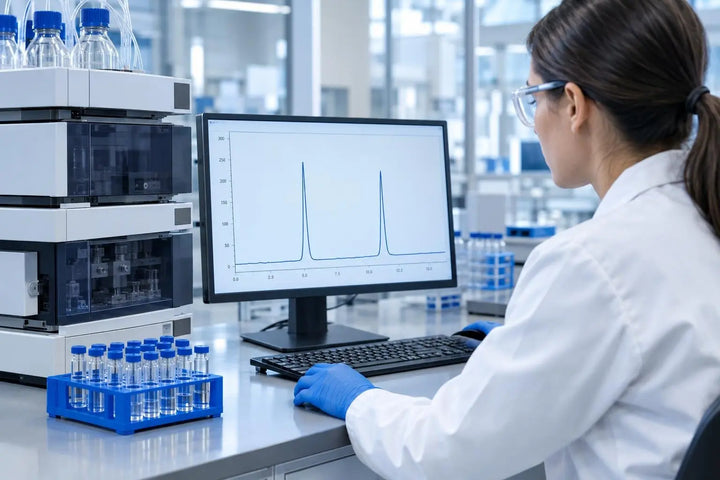
Purity is a chromatography result, not a visual one: reversed-phase HPLC separates and quantifies the main peak against impurities. A powder looking white tells you nothing about purity.
What else belongs in a sourcing check?
Lot-specific documentation, consistent net content, and sensible storage on arrival. Labs sourcing TB-500 often also evaluate the two-component BPC-157, TB-500 blend and single BPC-157 against the same COA standard.
Related research guides
Research-use note
All materials discussed are supplied for in vitro laboratory research use only, and are not for human or animal use.